LEFEET on the Water: Using the P1 from Your Yacht
Space on a yacht is finite. The water toys locker fills up fast: a scooter for diving, a paddleboard for the surface, something for the guests who just want to snorkel. Before long, you are managing a collection of single-purpose equipment that each needs its own charging cable, its own storage space, and its own set of instructions for whoever wants to use it next.
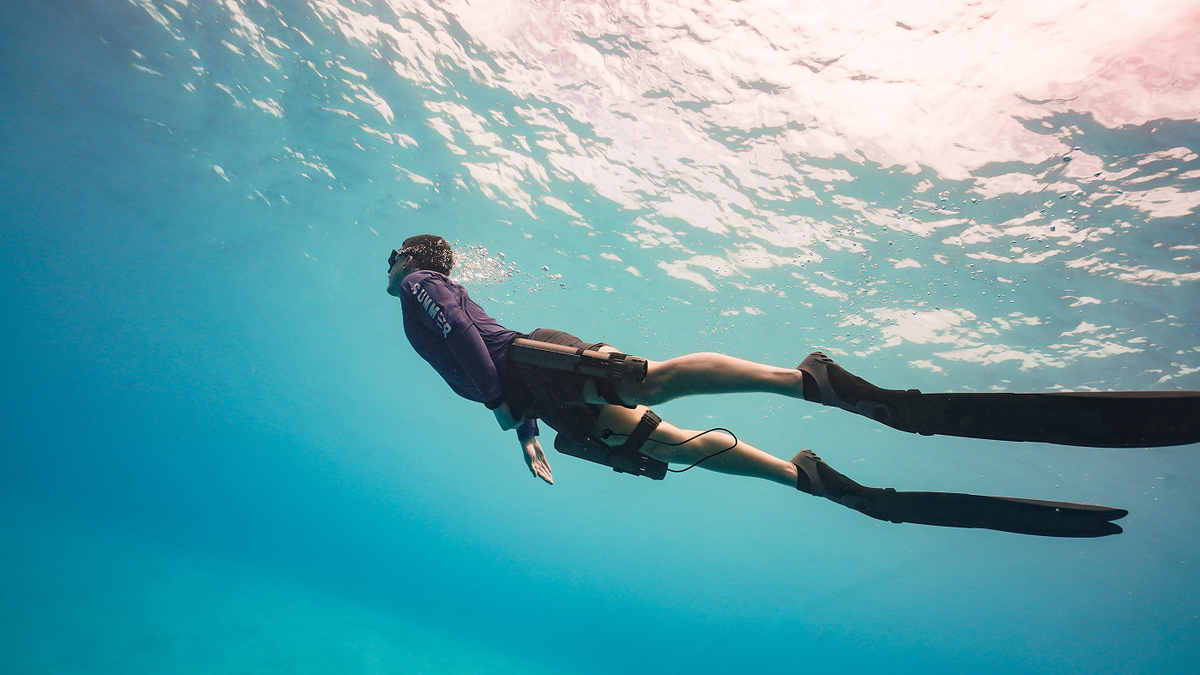
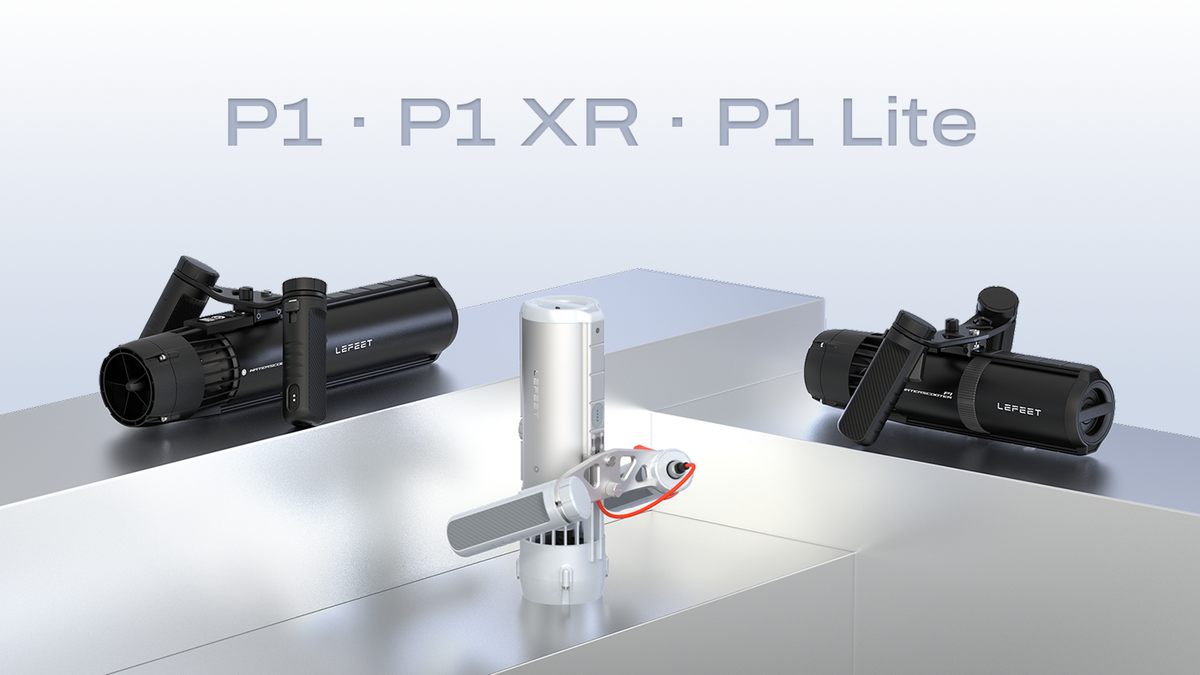
The LEFEET P1 replaces that collection with one motor unit. The same device clips into five different configurations: handheld, Tank Mount, Leg Mount, SUP Mount, Dual Rail. It switches between them in 30 seconds without tools. One device in the locker. Every activity covered.
SUP Mount: The Paddleboard That Moves Itself
The SUP Mount clips the P1 motor unit to the underside of a stand-up paddleboard, controlled via a wired remote with extension cable. The board moves under the P1's power while you stand, kneel, or sit on top.
On a yacht at anchor in a bay with any kind of breeze, paddleboarding upwind is work. With the P1 underneath, it is not. You cover the distance, explore the bay, reach the beach, and return to the boat without arriving exhausted.
For shuttling guests from the yacht to shore and back, a powered paddleboard is a genuinely practical option: flat, stable, no engine noise, no fuel, and it recharges via USB-C from the yacht's own power.
Practical note: The SUP Mount works with most standard paddleboard fin boxes. Check compatibility with your board before your first deployment.
Handheld: Snorkelling the Anchorage
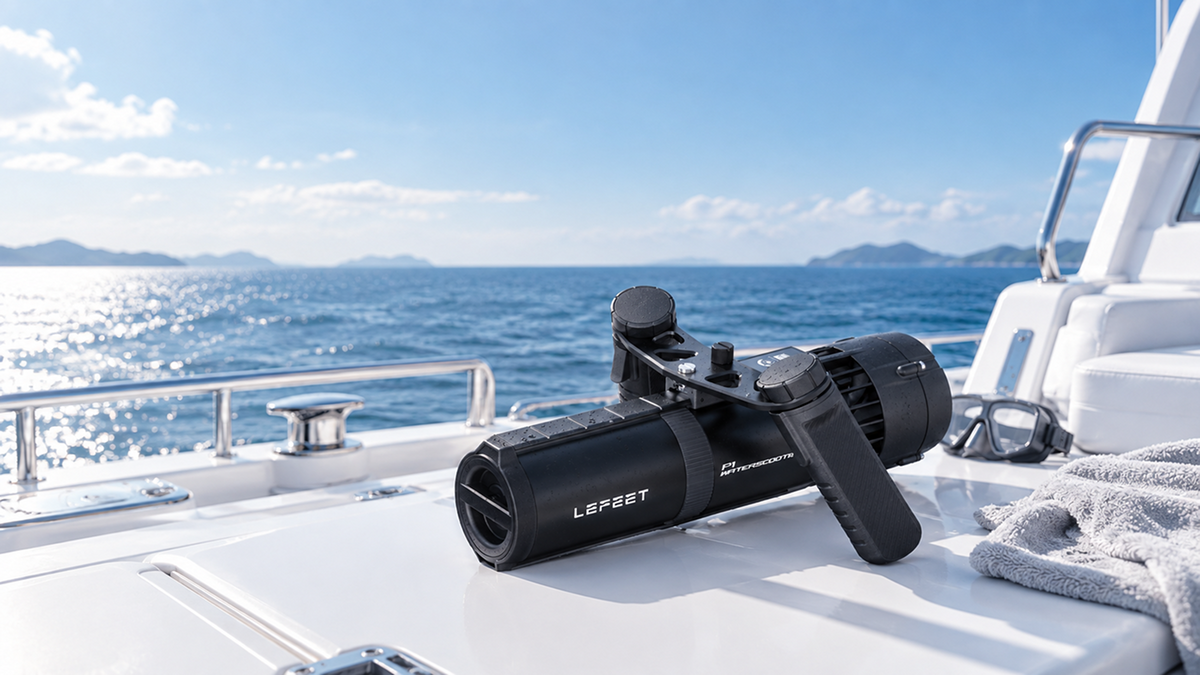
The P1 in handheld mode is an underwater scooter: trigger on the grip, one or two hands, forward through the water.
At anchor in a bay you have never visited before, that means covering the full extent of the reef, the anchor chain, the seagrass beds and the drop-off in a single session rather than choosing between them. You see more. You stay longer. You come back knowing the site.
The 100 Wh battery gives approximately 60 minutes of use at moderate speed, long enough for a thorough exploration of most anchorage dive sites with enough reserve to manage an unexpected current on the return.
The P1 XR's 160 Wh battery extends runtime to approximately 90 minutes, worth considering if the anchorage is large or if your guests tend to lose track of time underwater. Always confirm with your airline before travel if you are flying to your charter port with either battery.
Dual Rail: When the Current Is Running
Some anchorages are beautiful precisely because of the current that flows through them. That current brings nutrients, fish, and visibility. It also makes swimming back to the boat a meaningful physical effort.
Two P1 units on the Dual Rail deliver up to 3.2 m/s and 18 kgf of thrust. In most current conditions at recreational anchorages, that is enough to make headway rather than drift. You explore downcurrent and return under your own power rather than waiting to be collected.
The Dual Rail uses a wireless remote, the most comfortable option for surface swimming where managing a cable alongside fins, mask and a camera is impractical.
On the Yacht: Practical Considerations
Storage and Charging
The P1 battery charges from any USB-C source at up to 100W. Most modern yachts have USB-C available at the nav station, in cabins, or via deck outlets. The 1.5-hour charge time means a battery depleted during the morning snorkel session is ready again before the afternoon.
Carry a second battery if you have multiple guests or plan extended sessions. The batteries are interchangeable: charge one while the other is in use.
Flying to Your Charter Port
For charter guests flying to their embarkation port with a P1, the motor unit travels in checked baggage. The battery must travel in cabin baggage. Battery acceptance depends on capacity, airline, route and current carrier policy. Always confirm with your airline before travel. Our complete airline guide covers what to check and what to tell the check-in desk.
Saltwater Care
Rinse the motor unit and battery in fresh water after each use. The P1 is rated to 60 m, so surface saltwater exposure presents no operational risk, but regular rinsing extends the life of the housing and connection points. Dry before storage.
Who Is This For
Sailing Yacht Owners and Crew
A P1 in the locker is more versatile than a single-purpose snorkel scooter. It covers snorkelling, freediving, paddleboard assist and current diving from the same piece of hardware. One device, minimal storage footprint.
Charter Guests
For guests who dive, snorkel and paddleboard, the P1 means not having to choose which activity to prioritise at each anchorage. The configuration changes in 30 seconds.
Families
Younger family members who are confident swimmers can use the P1 in low-speed handheld mode with an adult in the water at all times. The speed settings are progressive, so it is straightforward to start slow and increase only when comfortable.
Configuration at a Glance
| Configuration | Activity | Control | Units |
|---|---|---|---|
| Handheld | Snorkelling, reef exploration | Trigger on grip | 1 |
| SUP Mount | Powered paddleboarding | Wired remote | 1 |
| Dual Rail | Surface and underwater in current | Wireless remote | 2 |
| Tank Mount | Scuba, underwater photography | Wired remote | 1 or 2 |
| Leg Mount | Freediving | Wired remote | 2 |
Frequently Asked Questions
Can the P1 be used on the surface as well as underwater?
Yes. The SUP Mount is specifically designed for surface use on a paddleboard. The handheld configuration works at the surface and underwater. The motor unit is rated to 60 m, so surface use presents no operational concerns.
How long does the battery last for paddleboard use?
Battery life depends on speed setting and load. At moderate speeds on a paddleboard, expect around 60 minutes from the 100 Wh battery and around 90 minutes from the 160 Wh XR battery.
Can multiple guests use the P1 on the same day?
Yes. With a second battery, one guest can use the P1 while the other battery charges. The 1.5-hour charge time means rotation is practical across a full day on the water.
What is the best setup for a family with mixed abilities?
Handheld at low speed for younger swimmers with an adult in the water, SUP Mount for paddleboarding, and Dual Rail for stronger swimmers or freedivers in the group. The same motor unit covers all three without any tools required to switch.
Does the P1 work with inflatable paddleboards?
The SUP Mount is compatible with most standard SUP fin box formats. Check your board's fin box specification against the mount dimensions before your first use.
Can the P1 be stored wet on a boat?
Rinse in fresh water after use and allow to dry before extended storage. For overnight or multi-day storage, keep the unit out of direct sun and away from standing water. Store the battery separately from the motor unit if the boat will not be used for an extended period.
The full LEFEET P1 modular system is detailed at lefeet.com/products/p1. For air travel guidance, see Can You Bring an Underwater Scooter on a Plane?