WWII History Meets Modern Tech: Diving the USS Emmons with the LEFEET P1 XR
The day after I unboxed my LEFEET P1 XR, I put it to the ultimate test. My dive buddies and I had a trip scheduled to the USS Emmons, a Gleaves-class destroyer that played a tragic and heroic role in the Battle of Okinawa.
In 1945, after being struck by five kamikaze planes, the US Navy made the difficult decision to scuttle her off Kouri Island to prevent her from falling into enemy hands. Today, she rests at 130 feet—a somber, massive monument to history.
Why a DPV is Essential for the Emmons
The Emmons is a massive wreck. Without a Diver Propulsion Vehicle (DPV), you’re usually forced to split the ship in two: finning from the bow to midship on one dive, then the stern to midship on the next.
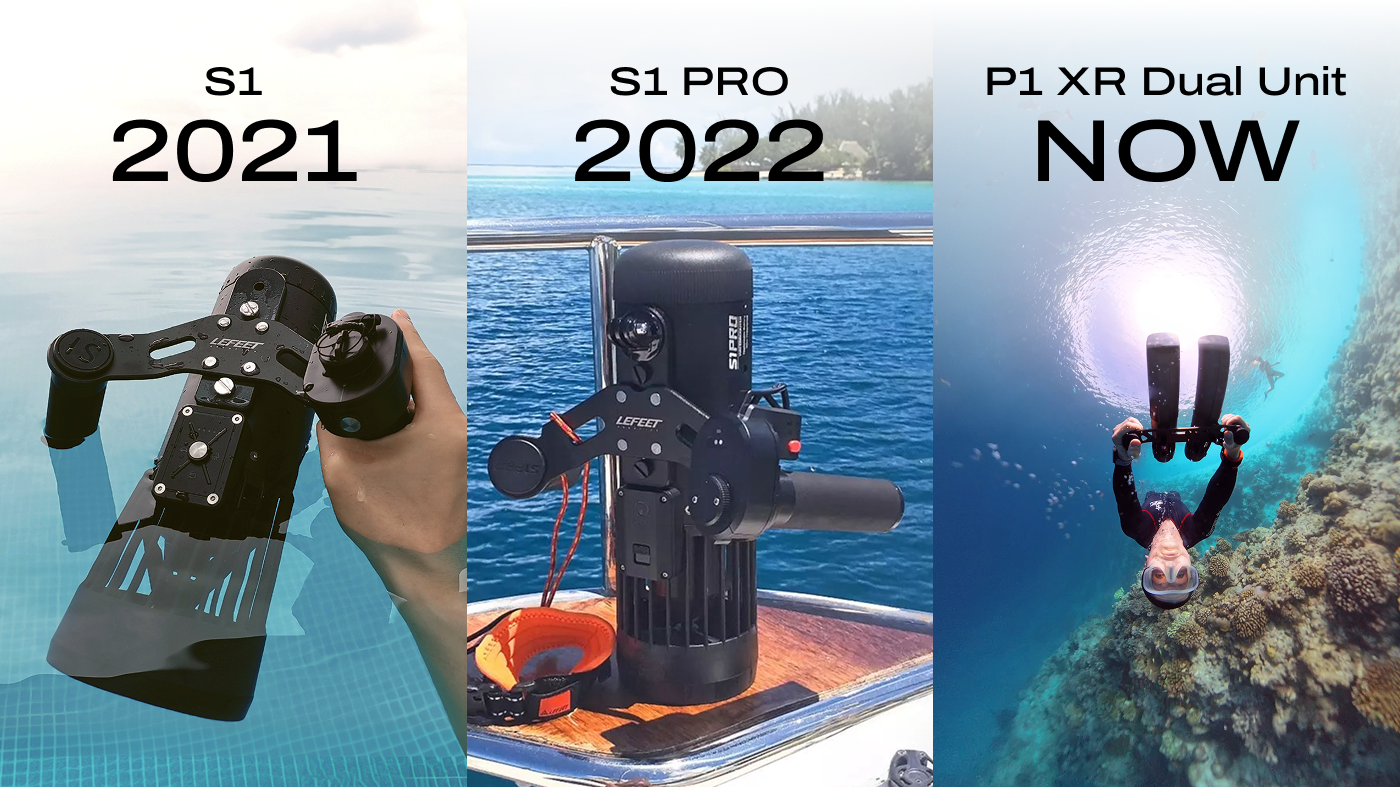
I wanted to see it all. While my buddies were using heavy-hitters like Black Tips and Triggerfish, I was confident my compact LEFEET P1 XR could keep pace.
Descent into History
Dropping through the hazy blue water, I momentarily lost sight of the line. But soon, the massive, ghostly hull began to materialize below me. Lying on her side at 130 feet, the ship felt enormous as I touched down.
As this was my first dive with the P1 XR, I spent the first few minutes getting a feel for the controls. It was intuitive and responsive. I was soon "scootering" toward the stern, where the massive propeller extends into the void. Nearby, a large section of the ship—including the rudder—lies separated, a testament to the violence of the attack 80 years ago.

Navigating the Debris Field
Diving on air at that depth means the clock is always ticking; we had just over 8 minutes of bottom time for our first descent. The LEFEET P1 XR pulled me effortlessly through the water, allowing us to cover a massive amount of ground:
-
Deck Guns & Depth Charges: Still mounted and hauntingly silent.
-
The Binnacle: A large, mounted compass still recognizable amidst the decay.
-
The Debris: Heaps of twisted metal and tangled cables scattered across the seafloor.
The ergonomics of the LEFEET P1XR really shone here. I was able to operate the thrust and shift speeds with my right hand while comfortably holding my 360 camera on a selfie stick with my left, capturing every angle of the wreck without struggling for stability.

A Somber Farewell
Before our ascent, we reached the midship line where a memorial plaque rests. It lists the names of the 60 sailors who lost their lives during the kamikaze strikes. We took a moment to photograph the names and pay our respects before beginning our ascent.
Even during the safety stops, the DPV was an asset. I held the midship line with one hand and the LEFEET P1 XR with the other, ensuring a perfectly controlled return to the surface.
Final Thoughts
After an hour-long surface interval, we headed back down for a second dive. By the time we hit the stern line again, the P1XR felt like an extension of my arm.
While the USS Emmons is a sobering reminder of the past, the LEFEET P1 XR turned a challenging deep dive into a seamless exploration. It didn't just "keep up" with the bigger DPVs—it maneuvered through the wreckage with a precision that made the dive unforgettable.